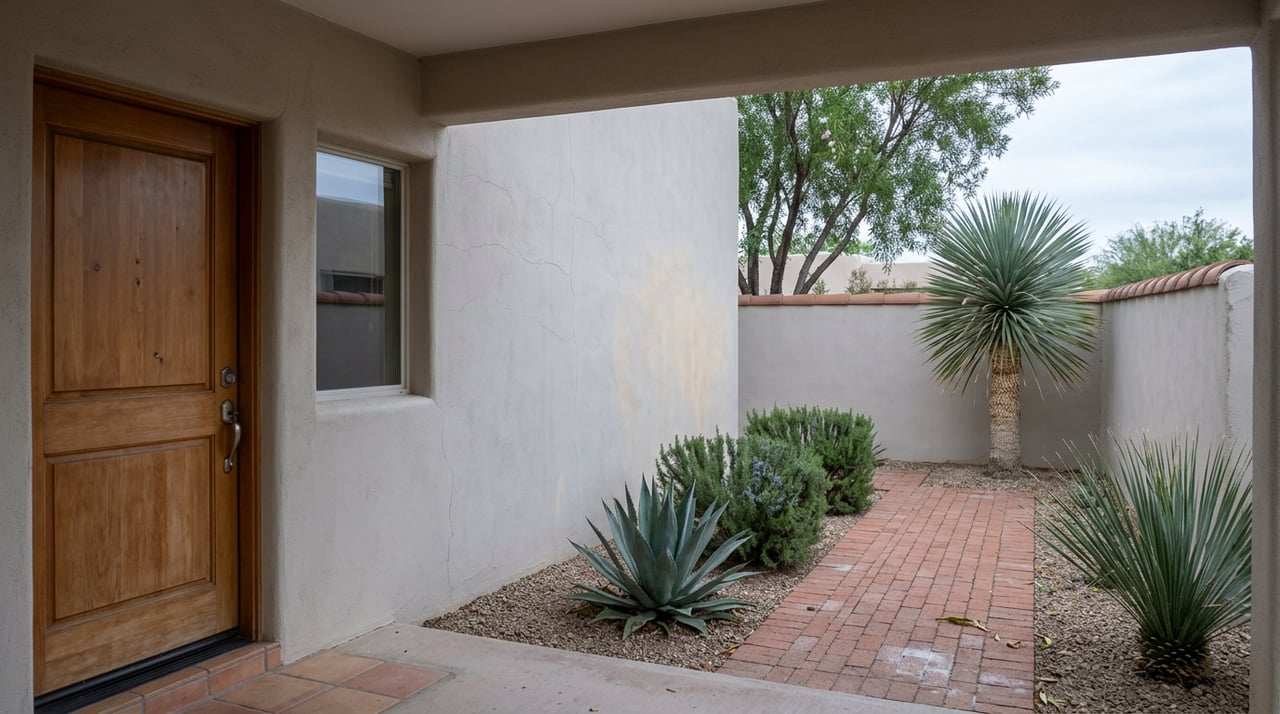
Eleven days from now, a clock runs out on a house at 1026 Upson Drive.
The property is a 1903 build in Sunset Heights, zoned residential-historic, carrying the designation the city calls "Contributing." Its owners, Eric and Juliet MacDonald, filed for a Certificate of Appropriateness on August 6 to alter the rear facade, removing and replacing a balcony and a porch. Under the schedule the city posts publicly, that application runs on a 45-day clock. It expires September 20.
Three days before this went live, a different clock closed. A homeowner on Bronze Way in Manhattan Heights, John H. Lanahan Jr., filed in July to replace windows on a 1930 landmark property. His window shut on September 6.
Neither filing is unusual. Both sit in the same place: the Historic Landmark Commission's own public agenda, logged as routine administrative review. That is the point of this post. If you are buying in Kern Place or Sunset Heights and you plan to touch anything on the outside of the house, this 45-day rhythm becomes yours the day you close.
What the Certificate Actually Covers
El Paso keeps nine historic districts, and Sunset Heights, Kern Place, and Manhattan Heights sit inside that group. The city's Historic Preservation Office reviews any proposed change to the exterior of a building or site inside one of those districts, whether the property carries a "Contributing" designation like the Upson Drive house or full "Landmark" status like the Bronze Way property. Interior remodels move through the standard permitting process like anywhere else in the city. Anything visible from the street, a roofline, a window style, a porch, a paint scheme on some blocks, goes through the Historic Landmark Commission or gets handled through administrative review by city staff, depending on scope.
Owning a designated property doesn't freeze it in place. The city is explicit that dated elements can be updated. What changes is the sequence: design first, approval second, permit third. Skip the middle step and a buyer risks a contractor stopping mid-project or a lender flagging unpermitted exterior work at refinance.
The Number That Reads Backward
Here's what a portal search shows a buyer looking at these two neighborhoods this year.
| Neighborhood | Median sale price (trailing 12 months) | Year-over-year change | Median days on market |
|---|---|---|---|
| Kern Place | $450,000 | +16% | 86 days |
| Sunset Heights | $310,500 | +22% | 91 days |
| National median | — | — | 48 days |
Read those three columns together and the story looks like a seller's market: double-digit appreciation in both neighborhoods, some of the strongest price growth in the metro. Read the middle column against the last one and the story flips. Homes here take almost twice as long to sell as the national median, even while prices climb faster than almost anywhere else in El Paso.
That combination doesn't happen in a demand-starved market. It happens when transactions carry an extra step buyers in newer subdivisions never encounter. A 45-day certificate review, a specialty insurance underwrite, or an appraisal contingency tied to century-old construction each add real calendar time to a deal that would otherwise close in five or six weeks. The price is rising because buyers want these blocks. The timeline is stretching because the paperwork behind these blocks is heavier than a median can show.
Where the Extra Days Actually Go
Three frictions stack on top of each other in a typical Kern Place or Sunset Heights transaction, and none of them show up on a listing sheet.
The exterior review. Anything from a new roofline to a replaced window triggers the Certificate of Appropriateness process described above. A buyer who wants to close and immediately start exterior work should build a 45-day cushion into the renovation schedule, not the closing schedule. They run separately.
The insurance underwrite. Older construction in these districts often prices differently than a standard policy assumes, which the next section covers in detail.
The appraisal. VA and FHA appraisers apply minimum property requirements that flag issues more often in century-old housing stock than in a 2015 build. That adds a negotiation step most newer-construction buyers never see.
Any one of these adds days. Stacked, they explain most of the gap between an 86-to-91-day neighborhood and a 48-day national median.
The Insurance Line Nobody Prices Into the Offer
El Paso as a whole carries a genuine cost advantage on homeowners insurance. Recent market data puts the average annual premium for $300,000 in dwelling coverage at $2,304, well under the Texas statewide average of $4,704 for the same coverage. That advantage narrows fast once a buyer is looking at a 1903 or 1915 build.
Older and historic homes routinely cost more to rebuild than they're worth on paper, which is the exact scenario an HO-8 policy exists for. A standard policy assumes replacement cost tracks market value. In a home built with materials and methods a modern contractor has to source or replicate at a premium, that assumption breaks, and insurers respond with narrower, named-peril coverage instead of the broader protection a newer home gets by default.
Local insurance agencies working this market are specific about where the risk concentrates. One El Paso agency writing homeowners coverage names Kern Place and the historic Barrio Antiguo directly, noting that adobe and brick construction in those blocks needs dedicated coverage for foundation settling and water intrusion, risks a standard suburban policy in a newer subdivision doesn't carry the same way. That's not a general Texas weather disclosure. That's a neighborhood-specific underwriting note, and it belongs in a buyer's budget before the offer goes in, not after the policy quote comes back higher than expected.
If You're Financing With VA or FHA
Government-backed loans add their own layer here. VA appraisals apply minimum property requirements that check the roof, foundation, and walls for defects, a category that shows up more often in older El Paso housing stock than in newer construction. If the appraiser flags an issue, a buyer has three paths: negotiate repairs with the seller, request a waiver for a minor item, or cover an appraisal gap in cash if the valuation lands below the purchase price. Appraisal fees in El Paso currently run $800 to $1,150 depending on the size of the home, and the VA's escape clause lets a buyer exit the contract without penalty if the property can't meet the standard.
FHA buyers face a parallel review for the same reasons, structural soundness, lead-based paint mitigation on anything built before 1978, and basic safety standards. A buyer paying cash skips this step entirely. A buyer financing with VA or FHA should assume it's coming and build it into the timeline from day one.
What a Renovation Here Actually Looks Like
The regulatory layer isn't theoretical. Robert Palacios, founder of Urban Revival Development, has spent the past few years working through exactly this process on a nine-unit property in Sunset Heights, a 1915 house he converted into apartments while staying inside historic district rules. Because the building sits in a designated district, he couldn't add closets that were never part of the original layout, so his contractors built custom cabinets to house modern washers and dryers instead. That's a small example, but it's the pattern: historic designation doesn't block a renovation, it reroutes it, and the buyer who plans for that reroute in advance spends less time and money finding out about it mid-project.
Before You Write the Offer
A few things worth confirming before an offer goes in on a Kern Place or Sunset Heights property, especially one you plan to modify:
- Check whether the property carries "Contributing" or "Landmark" status with the city's Historic Preservation Office. The designation affects how much latitude you have on exterior changes.
- Ask your insurance agent directly whether the property needs an HO-8 policy or a foundation-settling endorsement before you assume a standard homeowners quote applies.
- If financing with VA or FHA, ask your lender how recent appraisals in the district have gone and whether MPR repair items are common on comparable sales.
- Build a 45-day minimum into any exterior renovation plan, independent of your closing date.
FAQ
Does historic designation mean I can't renovate at all? No. The city is explicit that owning a designated property doesn't freeze its dated elements in place. It means exterior changes need Certificate of Appropriateness approval before permitting, while interior work follows the standard process.
Why do these neighborhoods show such strong price growth if they're harder to transact? The two aren't in conflict. Buyer demand for the walkability, architecture, and location near UTEP and downtown keeps pushing prices up. The extra approval and underwriting steps add calendar time to each sale without reducing how many buyers want in.
Is the 45-day review the same for every kind of change? The clock is consistent across the applications posted to the city's Historic Landmark Commission agenda, but the level of review, administrative sign-off versus full commission hearing, depends on the scope of what's being changed and whether the property is Contributing or Landmark status.
Does this affect resale down the line? A documented, approved renovation history can make a future sale smoother, since it gives a buyer's lender and insurer a clean paper trail instead of open questions about unpermitted exterior work.
Buying into Kern Place or Sunset Heights means buying into a neighborhood where the paperwork is part of the property. If you want to understand how a specific address's designation, insurance needs, and renovation plans fit together before you write an offer, David Torres at International Real Estate can walk through it with you. Schedule a consultation and get the full picture before the clock starts.